
Resurfacing Over Exposed Aggregate and Pebblecrete on the Gold Coast
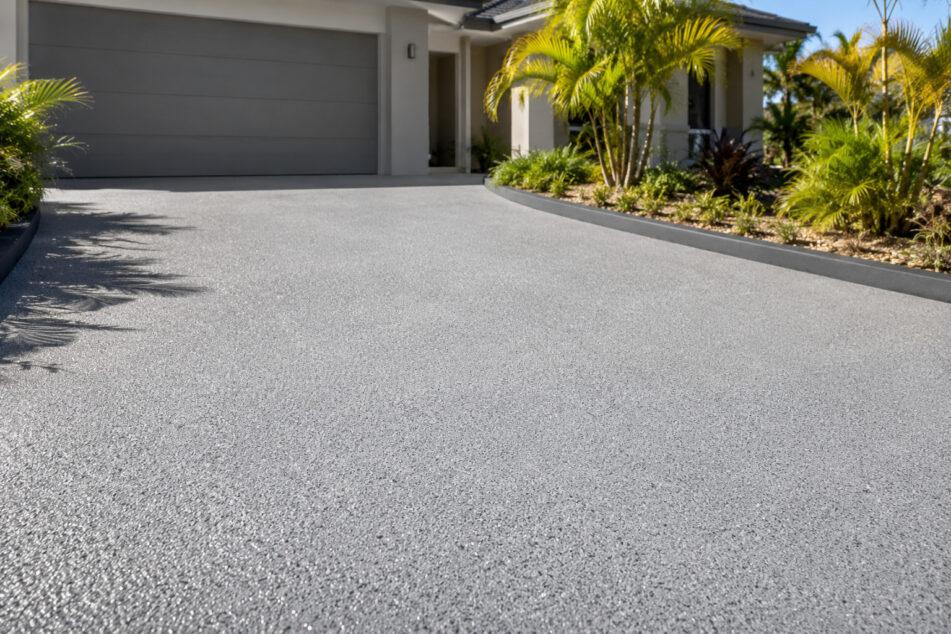
Most of the exposed aggregate and pebblecrete I get asked about looks the same way: rough underfoot, hard to clean, a bit faded, with the odd pebble starting to work loose. The homeowner stands on it and asks whether it can be sorted without ripping the whole lot up. Nine times out of ten the answer is yes — resurfacing over exposed aggregate is a real option, and it usually costs a fraction of demolishing and starting again.
In twenty years working with concrete on the Gold Coast to Redlands, I’ve coated over plenty of aggregate and pebblecrete slabs. This guide covers whether your surface is a good candidate, what the job involves, what it costs compared to replacing it, and the cases where resurfacing on top won’t hold. We’re supply-and-install only at Spray Your Concrete — so this is about the work done right, not a DIY how-to.
Can You Resurface Exposed Aggregate or Pebblecrete?
Yes — in most cases exposed aggregate and pebblecrete can be resurfaced without removing the existing slab. The coating is spray-applied straight over the top, so resurfacing over exposed aggregate avoids ripping the surface out and starting again.
Free On-Site Quotes, Gold Coast to Redlands
We come out, look at the surface, and give you a written price. No charge, no obligation.
Pebblecrete and exposed aggregate aren’t the same product — pebblecrete is a rounded river-pebble finish, while exposed aggregate is crushed stone washed back to sit proud of the surface. But for resurfacing, they amount to the same job: both are hard, stony surfaces, and the coating goes over either one the same way. Pebblecrete resurfacing follows the same approach as resurfacing any aggregate driveway or pool surround — same pebble surface to deal with, same method.
What catches people out is that the rough texture on top isn’t what decides the job. The slab underneath is. If the existing slab is solid and sitting still, the coating bonds and holds. If it’s moving — lifting, settling, cracking up from the ground — no coating fixes that, and resurfacing over the top would only buy a year or two. So the first thing I check on site isn’t how rough the surface feels. It’s whether the concrete beneath is sound.
Why Homeowners Resurface Aggregate Instead of Living With It
There are a few reasons people decide to do something about an aggregate or pebblecrete surface rather than put up with it.
The big one is that it’s coarse. Exposed aggregate is hard on bare feet — around a pool or on a patio where people walk barefoot, that texture gets old fast. It’s also a magnet for dirt. All those gaps between the pebbles trap grime, leaves and grit, and no amount of sweeping or pressure washing keeps it properly clean for long. Over the years, the pebbles can work loose, and once a few let go, you get a patchy, gritty surface that only gets worse.
Then there’s the look. A lot of pebblecrete went down decades ago, and a dated finish drags down the front of an otherwise tidy home — resurfacing dated stamped concrete comes up for the same reason, since stamped slabs from that era age much the same way. Most people want to refresh exposed aggregate without the upheaval of tearing it out.
That’s where resurfacing earns its place. It’s cheaper and far less disruptive than traditional pebblecrete or aggregate repair, and well under the cost of full replacement — you keep the slab you’ve already got and put a fresh, sealed surface over it. To be clear, that’s a coating job, not a repair service: I’m not patching pebbles back in or restoring the aggregate itself, I’m resurfacing it with a fresh surface layer.
What’s Involved in Resurfacing Over Aggregate
The job runs through the same five stages I’d use on any resurfacing, worked over the aggregate or pebble surface you’ve already got.
It starts with a thorough pressure wash to strip off dirt, grease, and anything loose on the surface. Next is crack repair — and this is the only repair work involved. I fill and make good any cracks or minor damage in the existing concrete as part of the prep, but that’s prep for the coating, not a standalone aggregate repair service. From there, a bonding primer goes down to key the new coating to the old surface. Then comes the build-up: three top coats of Step Safe Heavy Duty, the Shieldcoat product we use for all non-stencil resurfacing, applied as a covercrete resurfacing system straight over the existing surface. Last, two coats of clear sealer lock it in and give the finished surface its UV, stain and wear protection.
The part that matters most on an aggregate surface is what we don’t do: the coating isn’t ground back or levelled flat first. It’s spray-applied straight over the top, keying into the pebble texture and following the existing profile. That’s exactly why a sound slab counts for more than a rough surface — the system bonds to and coats over the pebbles without any trouble, so the texture isn’t the problem. Movement underneath is. And we run the whole job with our own team, start to finish, no subcontracting.
Will It Be Smooth Afterwards, or Still Textured?
Still textured — and that’s worth being upfront about, because it’s the thing people most often get wrong. Because the coating is sprayed straight over the surface rather than removed, it keys into the existing texture and follows the profile beneath. You end up with a fresh, recoloured, properly sealed surface, but the pebble texture still shows through. It won’t come out dead smooth. If a glass-smooth finish is what you’re after, straight-over resurfacing isn’t the way to get there, because the method works with the texture instead of taking it off.
For most outdoor surfaces, that’s a good thing. The retained texture, combined with the P5 anti-slip rating of the Step Safe Heavy Duty coating, means real grip underfoot — handy around a pool or on a driveway. To set expectations honestly, the finished surface grips much like the original aggregate did, maybe a touch rougher, rather than being a dramatic upgrade on it. The P5 rating (AS/NZS 4586) comes from the coating; the texture underneath is doing roughly what your aggregate already did.
When Resurfacing Aggregate Isn’t the Right Call
Resurfacing isn’t the answer for every surface, and I’d rather tell you that up front than have you spend money on a job that won’t last.
The main one is movement. If the slab is shifting — active cracks that are still opening up, sections lifting, or parts of the surface settling at different heights — a coating won’t hold it together. Resurfacing renews the surface; it doesn’t stabilise the ground underneath. Lay a coating over a moving slab, and the same cracks will track through it before long.
The aggregate itself can also rule it out. If the surface is badly spalling, or the pebbles are lifting and letting go in patches rather than the odd one here and there, there may not be a sound enough base to coat over. And drainage matters — if water pools and sits on the surface instead of running off, that needs sorting first, or it’ll undermine the finish.
The thing is, none of this is guesswork. A coating holds when what’s underneath is sound, and whether yours is sound is exactly what I work out on site. That’s what the free on-site assessment is for — I’ll look at the slab, check for movement, and tell you straight whether resurfacing is worth doing or whether you’d be throwing good money after bad. It’s a supply-and-install job done by our team, not something you’d take on yourself with a kit, so the assessment is where it starts.
What It Costs Compared With Ripping It Up
Resurfacing starts from $50 per square metre, supply-and-install. That’s the figure worth holding onto, because the alternative — pulling the old surface out and laying fresh aggregate — works out a fair bit dearer once you add it all up.
New exposed aggregate typically runs around $120 to $200 per square metre for the aggregate alone, before labour. And that’s just the new surface. Replacing what you’ve already got means demolition and disposal on top — industry cost guides put removing and carting away an old slab at roughly $45 to $65 per square metre. So you’re paying to destroy the surface you have, cart it to the tip, then pay a premium rate to pour and finish a new one.
Resurfacing skips all of that. You keep the existing slab, so there’s no demolition, no disposal and no premium pour — which is why it lands well under the cost of ripping it up and starting again. It’s cheaper than traditional pebblecrete or aggregate repair for the same reason: you’re working with what’s already there rather than tearing into it.
| Resurface the surface | Rip up and replace | |
| Cost | from $50/m², supply-and-install | ~$120–$200/m² plus removal and disposal |
| Time | around a day on a typical surface | several days, plus curing time |
| Disruption | minimal — the slab stays put | high — demolition, spoil removal, new pour |
In terms of lifespan, a resurfaced surface lasts 10 to 15 years on a sound residential slab. The Step Safe Heavy Duty coating carries a 7-year manufacturer warranty from Shieldcoat against flaking, peeling and cracking under normal use — that’s a product warranty on the coating, separate from anything to do with workmanship.
Which Surfaces Can Be Resurfaced — Driveways, Patios, Paths and Pool Surrounds
Aggregate and pebblecrete turn up all over a property, and the resurfacing works across the lot — though each surface has its own thing to watch.
Driveways are the most common job. Aggregate driveways take a beating from tyre traffic and weather, and they’re usually the surface dating the front of a house. The coating handles vehicle traffic fine, which is why driveway resurfacing is where many of these enquiries start.
Pool surrounds are the other big one. This is where the P5 grip earns its keep — wet feet, kids running, and an old pebble deck that’s either too rough underfoot or, once it’s worn, too slick in patches. A resurfaced pool deck gives you a consistent, slip-rated surface around the water.
Patios and paths round it out. An aggregate patio that’s coarse to sit and walk on, or a path that’s gone gritty and uneven, both coat over the same way. Same five-stage process, same retained-texture result — just scaled to the surface.
One quick aside, because it comes up: if you actually want the aggregate look on a plain concrete surface — the opposite of what this article is about — that’s a different job, and getting the exposed aggregate look with resurfacing is the guide for that one.
Frequently Asked Questions
Worth Resurfacing? Get the Slab Looked At First
If your exposed aggregate or pebblecrete is rough, hard to keep clean or just looking its age, resurfacing over the top is usually a sound option — you keep the existing slab, skip the demolition, and end up with a fresh, sealed surface for well under the cost of ripping it up. The catch is that it only holds if the concrete underneath is sound, and that’s not something to guess at.
So the sensible first step is to have someone look at it. We cover the Gold Coast to Redlands, we’re QBCC licensed (#1205294), and the on-site assessment is free — I’ll check the slab for movement and tell you straight whether resurfacing is worth doing on your surface. Give Spray Your Concrete a call on 1800 954 449 to book a look.

