
Stencilled Concrete Driveways on the Gold Coast — Is Stencil the Right Finish for Your Driveway?
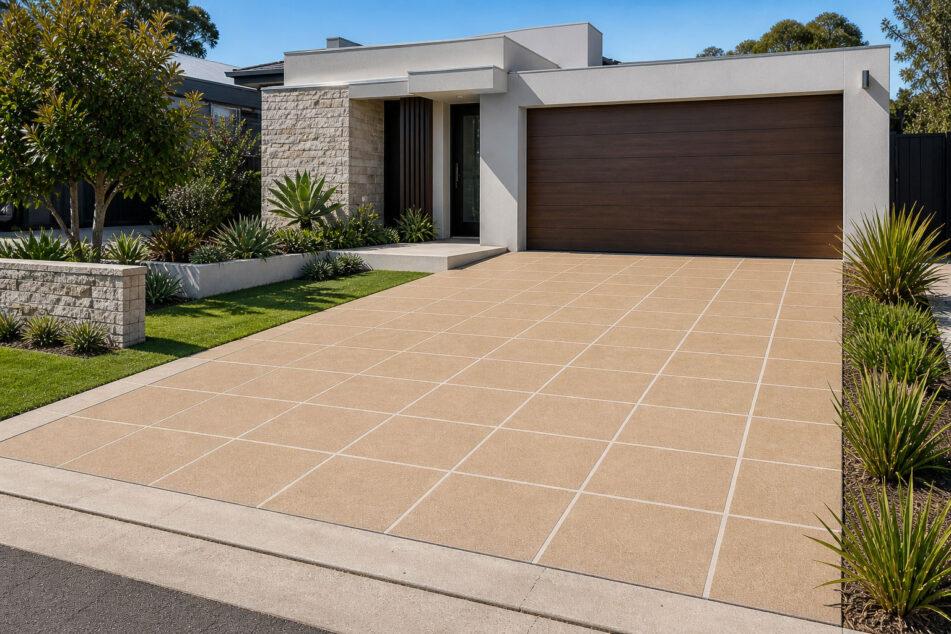
Most of the stencilled concrete driveway jobs I quote start the same way. A homeowner points to a tired-looking slab — sun-faded, maybe with a few hairline cracks — and asks whether a stencilled finish would smarten it up to avoid ripping the whole thing out. The honest answer is: usually yes, but not always.
A stencilled driveway is a decorative concrete resurfacing system applied over your existing concrete. At Spray Your Concrete, we don’t pour new slabs, and we don’t paint over the old one. We resurface what’s already there, lay a stencil pattern through the top coats, and seal it. Done well, it gives you a paver or cobblestone look at a fraction of the cost of a real paved driveway — and it handles a typical Gold Coast or Redlands driveway without complaint.
Whether it’s the right call for your driveway is the question worth answering before you ring around for quotes. Here’s how I work through it on a typical site visit.
Free On-Site Quotes, Gold Coast to Redlands
We come out, look at the surface, and give you a written price. No charge, no obligation.
What is Stencilled Concrete?
Stencilled concrete is a decorative concrete resurfacing system applied over an existing slab. It isn’t a new pour and it isn’t paint. The finished surface is bonded to the concrete underneath, with a paper stencil pattern laid into the top coats so that what’s left behind looks like pavers, brick, cobblestone or slate — set into a single continuous surface rather than dozens of separate pieces.
For stencilled work specifically, I use the Dulux Avista resurfacing system — Resurfacing Primer, Resurfacing Base Compound, Colour Oxide, and General Purpose Concrete Sealer. It’s the system better suited to stencil concrete work, which is why we’ve kept it for this application even where we use a different product family for plain and textured resurfacing.
Whether a stencilled concrete driveway is the right call for your specific driveway is a different question — and the answer depends on three things.
When a Stencilled Driveway Is the Right Call
On a typical Gold Coast quote visit, there are three conditions I look for before recommending a stencilled driveway over the alternatives. When all three line up, stencil is the right call.
The first is the slab itself. The existing slab needs to be structurally sound — no visible movement, no settlement, hairline cracks at worst. A stencil concrete driveway is a bonded overlay; it goes where the slab goes. If the concrete underneath is shifting, no resurfacing system will hold for long. So the on-site assessment starts there: I’m looking at the slab before I’m looking at colours.
The second is what you want the finish to do. If you want a paver look, a cobblestone or brick pattern, the warmth of a tiled surround — without the cost, the weeds-between-the-joints, or the unevenness of real pavers — stencil is the system that gets you there. It suits homes where the architectural style benefits from a patterned surface: Queenslanders, Hamptons-style builds, and traditional brick homes all sit well with a stencilled driveway out front, because the pattern complements the façade rather than fighting it. A lot of that decision comes down to look, so it’s worth browsing the stencil concrete patterns and choosing the right colour and design before you settle.
The third is what the driveway has to endure. Stencil works for normal residential driveway traffic — daily car use, the occasional trade ute, weekend caravan. For heavy commercial vehicles or constant-turning loads, a plain-coloured covercrete or textured finish is a more sensible call. For a working family driveway, kerb appeal and durability sit comfortably together with stencil.
When a Stencilled Concrete Driveway Is NOT the Right Call
There are four situations where I’ll look at a driveway and tell the homeowner stencil isn’t the right finish. Honest trade-offs save everyone time at the quote stage.
The first is a moving slab. Visible heave, slab settlement, or cracks wider than about 3mm running through the concrete — nothing applied on top will hold. A bonded overlay goes where the slab goes, and if the slab is shifting, you’ll see it through the finish within a year or two. That driveway needs the underlying movement addressed first, or in some cases a full slab replacement, before any resurfacing conversation makes sense.
The second is heavy shade. A driveway tucked under tree cover or hemmed in by a south-facing wall stays damp for longer after rain — and damp surfaces put more mould pressure on the sealer. The look is also less impressive in low light, where the pattern definition that makes stencil work just doesn’t pop. A flecked finish or textured concrete handles damp shade better and looks the part in a covered space.
The third is a slab with hairline cracks the homeowner wants hidden. A stencil pattern actually emphasises hairline cracks rather than disguising them, because the pattern lines run straight through the cracks and draw the eye to them. If hiding small cracks matters to you, a fleck or salt-and-pepper finish hides them far better than any stencilled pattern can.
The fourth is heavy traffic. Trade vans turning hard, daily commercial loading, repeated tight cornering — for that kind of use, a plain coloured covercrete or a textured finish on a stencil concrete driveway substrate is the more sensible call. Stencil suits residential life, not a working depot.
If any of those describe your driveway, the next conversation isn’t about stencil — it’s about whether resurfacing is the right call at all.
How a Stencilled Driveway Holds Up — Tyre Traffic, Sun, and Sealing
A stencilled driveway holds up well to normal residential life when it’s prepped, applied and sealed properly. Three things matter most for how it ages: tyre traffic, sun, and the sealing cadence over time.
Tyre traffic. A properly sealed stencilled driveway handles daily tyre traffic without issue. The risk to watch for is hot-tyre pickup — when warm tyres sit on a sealer that hasn’t fully cured, they can pull at the soft surface as they cool and leave a faint mark. The fix is straightforward: respect the cure time. Our resurfacing process finishes with two coats of sealer at install, and we’ll give you specific drive-on guidance based on the weather on the day. Wait that out and tyre traffic isn’t a problem.
Sun and fade. Gold Coast UV is intense, and a stencil colour does fade faster than a flecked or textured finish in full sun. North-facing, uncovered driveways feel that more than shaded or south-facing ones. There are two ways to manage it. The first is the colour choice at quote time — deeper tones hold their depth longer than pale ones under heavy UV exposure. The second is staying on top of the resealing schedule rather than letting the sealer wear thin.
Sealing cadence. The sealer is the wear layer on a stencil concrete driveway, and it does its job for a few years before benefiting from a refresh. Periodic concrete sealing every few years maintains colour depth, slip resistance and surface protection — and it’s a far cheaper line item than letting the finish degrade to the point where you need to resurface a stencilled driveway from scratch.
What a Stencilled Concrete Driveway Costs (and the Process)
Stencil concrete driveway cost on the Gold Coast starts at $50 per square metre, with stencilled work at the upper end of the resurfacing price range due to the extra labour involved in laying the pattern. For a typical 30m² Gold Coast driveway, that’s a starting figure of around $1,500 — with the caveat that pattern complexity, the number of colours, and the condition of the existing slab will push the final quote up from there. Compare that to pulling up the slab and re-pouring a new driveway at $100–$200 per square metre, and resurfacing usually wins on cost alone. Honest concrete driveway resurfacing costs for a stencilled finish are best confirmed with a free on-site quote — the slab tells you more than a calculator ever will.
The install itself is straightforward. We pressure wash the existing concrete, repair any cracks or surface damage, then apply a bonding primer. From there, three top coats go on with the stencil laid in during the second coat to set the pattern. Two coats of clear sealer finish the job. Most stencilled driveways take one to two days on site, and you’ll typically be back to driving on it after the sealer has cured — we’ll give you specific drive-on time guidance based on the weather and the install schedule.
If a stencilled concrete driveway sits within your budget and the slab is in good shape, the next step is the on-site assessment.
Stencilled Concrete Driveway FAQs
Is stencilled concrete good for driveways?
Stencilled concrete is a good choice for driveways when the existing slab is structurally sound, you want a paver, brick or cobblestone look, and the driveway carries normal residential tyre traffic. It isn’t the right call for every driveway — moving slabs, heavily shaded driveways, or sites with heavy commercial traffic suit a different finish. The honest answer comes from looking at the specific slab, which is what the on-site assessment is for.
How long does a stencilled concrete driveway last?
A stencilled concrete driveway lasts many years when the prep, install and sealing are done properly. The sealer is the wear layer that takes the brunt of UV, tyre traffic and weather, so the finish lasts longer when the resealing schedule is kept up. Our resurfacing process finishes with two coats of sealer at install, and periodic resealing every few years maintains colour depth and surface protection without redoing the whole driveway.
Can stencilled concrete be applied over an existing driveway?
Yes — that’s exactly what stencilled concrete resurfacing is. The decorative finish is bonded directly to the existing concrete, so as long as the slab is structurally sound, no demolition or re-pour is required. Stencilled concrete suits existing concrete driveways that are tired or dated but still in good structural shape underneath.
Is a Stencilled Concrete Driveway Right for Your Home?
Whether stencilled concrete suits your driveway comes down to two things: the condition of the existing slab, and what you want the finish to do for the front of your home. If both of those line up, stencil is one of the better-value decorative resurfacing options on the Gold Coast to Redlands.
The honest answer for any specific driveway comes from looking at it in person. You can read more about our stencilled concrete work on the Gold Coast or call Spray Your Concrete on 1800 954 449 for a free on-site quote — we’ll come and tell you straight whether stencil is the right call for your slab.

